Kawaii Christmas Gingerbread Clipart for Branding and Illustrations
As a brand designer who has spent years refining visual identities for small businesses and digital creators, I approach every new asset with a critical eye. It is not enough for an image to simply look "cute"; it must serve a strategic purpose in communication. Recently, I evaluated the Kawaii Christmas Gingerbread Clipart set to determine its viability for real-world marketing campaigns. The goal was to assess whether this collection could elevate seasonal content without compromising professional integrity or visual consistency.
The first impression of this graphic design asset is immediate warmth. In a crowded digital landscape, where users scroll past hundreds of images daily, emotional resonance is the key to stopping the thumb. This illustration style taps into the universal nostalgia of the holiday season while maintaining a modern, playful aesthetic. It does not feel childish; rather, it feels approachable and friendly. For brands that rely on personality-driven marketing, such as lifestyle bloggers, handmade product sellers, or cozy cafes, this mood aligns perfectly with their voice. It creates an inviting atmosphere that encourages engagement rather than just passive viewing.
Strategic Application in Seasonal Campaigns
To test the versatility of these illustrations, I imagined a realistic scenario: a small business owner launching a limited-edition line of holiday cookies or a digital planner bundle for the winter season. The challenge in such projects is often balancing festivity with clarity. If the visuals are too busy, they distract from the call to action. If they are too plain, they fail to capture the festive spirit.
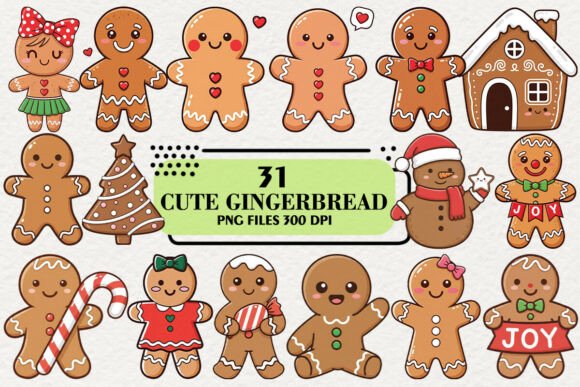
The Kawaii Christmas Gingerbread Clipart strikes a balance between decorative charm and functional simplicity. Because the figures are distinct and clearly defined, they can be used effectively in various marketing contexts. For instance, when designing social media graphics for Instagram or Pinterest, these elements can act as focal points that draw the eye toward promotional text. They work exceptionally well as accents on lead magnets, such as free holiday checklists or recipe downloads, adding a layer of polish that suggests quality to the user.
In the realm of content marketing, consistency is paramount. A strong brand identity relies on a cohesive visual language across all touchpoints. Using a unified set of illustrations ensures that your email banners, website headers, and blog posts feel like part of the same family. This clipart set provides that cohesion. Whether you are creating a Facebook ad for a seasonal sale or a Pinterest pin for a DIY tutorial, the consistent art style reinforces brand recognition. Over time, audiences begin to associate this specific visual tone with your business, building trust and familiarity.
Visual Hierarchy and Audience Perception
One of the most important aspects of any design asset is how it interacts with typography and layout. From a branding perspective, the Kawaii Christmas Gingerbread Clipart supports clear visual hierarchy. The rounded shapes and soft lines of the kawaii style naturally guide the viewer’s gaze without overwhelming the text. This makes it an excellent choice for editorial design, where readability remains a priority alongside aesthetics.
When selecting fonts to pair with these illustrations, designers should consider the contrast in styles. A clean sans serif font can provide a modern counterpoint to the whimsical characters, making the overall design feel contemporary and balanced. Alternatively, pairing them with a handwritten or script font can enhance the personal, handmade feel, which is ideal for artisanal brands. However, caution is advised when using overly ornate display fonts, as they may compete with the detailed features of the gingerbread figures. Testing different combinations in mockups is essential to ensure that the message remains the hero, supported by the imagery rather than obscured by it.
Audience perception is also influenced by color psychology. While the default colors of gingerbread—warm browns, creams, and reds—are inherently seasonal, the true power of this asset lies in its adaptability. By applying your brand’s specific color palette through recoloring tools, you can integrate these illustrations seamlessly into your existing identity. This technique transforms generic clipart into custom brand assets, elevating the perceived value of your products and services.
Practical Use Cases Across Digital Platforms
The utility of this PNG design extends far beyond simple decoration. Here is how it performs in specific marketing channels:
- Social Media Graphics: Use individual gingerbread characters to create carousel posts that tell a story, such as "Five Ways to Spread Holiday Joy." Each slide can feature a different character performing an action, keeping the content dynamic and engaging.
- Packaging Design: For physical products, these illustrations can be printed on stickers, tags, or wrapping paper. Their high-resolution quality ensures they look crisp and professional, adding a tactile element of delight for the customer.
- Digital Ads: In paid campaigns, attention spans are short. These bold, recognizable figures can grab attention quickly in ad spaces where space is limited. They convey the holiday theme instantly, reducing the cognitive load on the viewer.
- Email Marketing: Incorporating these clips into newsletter headers or dividers breaks up text blocks and adds a visual break that improves readability. They signal to the subscriber that the content inside is special and curated.
Furthermore, this asset is highly suitable for creating Canva templates. Many small business owners and coaches use template markets to sell pre-designed resources. Including this clipart in a bundle allows buyers to easily customize their own materials, increasing the perceived value of the digital product. As long as the commercial license permits resale or modification, this can become a recurring revenue stream for creative entrepreneurs.
Limitations and Best Practices
No design asset is universally perfect, and understanding the limitations of the Kawaii Christmas Gingerbread Clipart is crucial for effective usage. First, avoid using these illustrations in formal corporate branding contexts where a serious, authoritative tone is required. The playful nature of kawaii art may undermine credibility in industries like finance, law, or healthcare, unless the brand specifically aims for a quirky, unconventional identity.
Additionally, be mindful of scale. While these images are scalable, extremely small sizes on mobile devices may cause fine details to blur or become indistinct. Always preview your designs on actual mobile screens to ensure legibility. Similarly, dense information layouts should be approached with care. If the background is cluttered or contains too much text, the illustration will get lost. Use ample white space around the graphics to let them breathe and maintain their impact.
Another critical consideration is contrast. Ensure that the colors of the gingerbread figures stand out against their backgrounds. Low-contrast combinations can make the asset appear muddy or invisible, especially in print formats. Testing in black and white is a useful exercise to check the structural integrity of the design before adding color.
Final Verdict for Content Creators
In conclusion, the Kawaii Christmas Gingerbread Clipart is a versatile and emotionally resonant addition to any marketer’s toolkit. It successfully bridges the gap between festive cheer and professional presentation. For small business owners, bloggers, and designers looking to refresh their visual content for the holiday season, this asset offers significant value. It supports stronger first impressions, enhances brand consistency, and fosters an emotional connection with the audience.
By integrating these illustrations thoughtfully into your workflow—from social media posts to packaging inserts—you can create memorable campaign visuals that stand out in a noisy market. Just remember to respect the boundaries of your brand voice, test your layouts rigorously, and always verify licensing terms. When used correctly, this graphic design asset becomes more than just a picture; it becomes a strategic tool for growth and engagement.